Quick answer
Should I repair or replace my roof?
Repair makes sense when damage is limited to a small area, the roof is fairly young and the decking is solid. Replace it when shingles are near the end of their life, hail has bruised or cracked shingles across several slopes, leaks keep showing up in new spots, or the decking is soft. An inspection on the roof, not from the driveway, tells you which.
Roofing in Lincoln, NE: What We Do
We replace and repair residential roofs and inspect roofs after storms or as they age. That covers full tear-off and replacement, leak and shingle repairs, flashing and vent fixes, and hail and wind damage. We also handle commercial roof installations and replacements for builders and property managers; see commercial exterior work.
- Roof replacement. Tear-off, decking repair, ice barrier and underlayment, flashing, ventilation and new shingles.
- Roof repair. Missing or creased shingles, leaks at vents, chimneys and walls, and damaged flashing.
- Roof inspections. After hail or wind, before buying or selling, or when a roof is getting older.
- Storm damage. Hail and wind damage to roofs, siding and gutters.
- Commercial roofing. Installations and replacements on commercial buildings.
Because we also do gutters, soffit and fascia and siding, a roof that needs edge work does not have to wait on a second contractor.
Roof Repair or Roof Replacement: How to Tell
Repair when the problem is local: a few blown-off shingles, one leaking vent boot, or a flashing gap at a wall. Replace when damage or wear is everywhere: hail bruising across several slopes, curling or cracking shingles, heavy granule loss, repeat leaks or soft decking. Age matters too. Many asphalt shingle roofs last roughly 20 to 30 years, and less after heavy hail.
| Situation | Usually a repair | Usually a replacement |
|---|---|---|
| Missing shingles | A few after one wind storm | Many, or shingles that no longer seal down |
| Leaks | One leak at a vent, chimney or wall | Leaks in several spots, or leaks that keep coming back |
| Hail | Isolated hits on a few shingles | Bruises, cracks or exposed mat across several slopes |
| Shingle condition | Mostly flat and sound | Curling, cracking, or bald spots from granule loss |
| Decking | Solid underfoot | Soft, sagging or rotted areas |
| Age | Well short of its expected life | Near or past the end of its expected life |
| Layers | One layer | Already two layers; in Lincoln, all layers must come off |
How Nebraska Hail and Wind Damage a Roof
Hail bruises and cracks asphalt shingles and knocks off the granules that protect them from the sun. Hail about an inch or larger, quarter size, commonly damages standard shingles, and heavier laminated shingles hold up to slightly bigger stones. Wind lifts shingle edges, breaks the seal strips and tears off tabs. Around Lincoln, hail reports are most common from April through June.
Signs of hail damage
- Dark spots or soft bruises on shingles
- Granules piled in gutters or at downspout outlets
- Dents in metal vents, flashing, gutters and downspouts
- Cracked or split shingles
Signs of wind damage
- Missing shingles or exposed underlayment
- Creased shingles that bent back and did not lay flat again
- Lifted ridge caps
- Shingle pieces in the yard
Do not climb a wet or damaged roof to check. If a storm just came through, start with our hail damage repair page.
What a Roof Inspection Covers
A real roof inspection checks shingles, flashing, vents, decking and the attic, not just what shows from the street. The inspector walks the roof where it is safe, looks for hail and wind damage, checks flashing at walls, chimneys and valleys, feels for soft decking, and looks in the attic for leaks, stains and poor ventilation. You should get photos and a clear repair or replace answer.
- Shingles. Bruises, cracks, curling, granule loss and missing pieces.
- Flashing. Chimneys, walls, valleys and skylights, where most leaks start.
- Vents and pipe boots. Cracked rubber boots and dented metal vents.
- Edges. Drip edge, fascia and how the gutters catch water.
- Decking. Soft or spongy spots underfoot.
- Attic. Water stains, daylight through the deck, frost on the nails in winter and blocked soffit vents.
Roof Replacement in Lincoln, NE, Step by Step
A typical roof replacement goes in this order: inspection and written bid, material choice, scheduling, tear-off, decking repair, ice barrier and underlayment, flashing and drip edge, shingles and ridge vent, then cleanup with a magnet sweep for nails. Many homes are done in a few days, weather permitting. Lincoln also has local reroofing rules, so ask any roofer how they meet them.
- Inspection and written bid. Scope, materials and how decking repairs will be handled.
- Materials and color. Shingle type, color, and ventilation plan.
- Prep. Landscaping, siding and windows are protected, and a dumpster is placed.
- Tear-off. Old shingles and underlayment come off down to the deck.
- Decking. Rotted or damaged sheathing is replaced.
- Ice barrier and underlayment. Self-adhering ice barrier at the eaves, then underlayment over the rest.
- Flashing and drip edge. New flashing at walls, valleys, chimneys and vents, with drip edge on eaves and gables.
- Shingles and ridge. Shingles installed to the maker's nailing pattern, then ridge caps and vents.
- Cleanup. Debris hauled away and a magnet sweep for nails.
The City of Lincoln's re-roof policy sets local rules. If a roof already has two or more layers, all of them must come off. An ice barrier is required from the lowest edge of the roof to at least 24 inches inside the exterior wall line. Drip edge is required on eaves and gables, and chimneys 30 inches or wider need a cricket. A building permit is needed when rotted sheathing or rafters are repaired or the roof is re-sheathed.
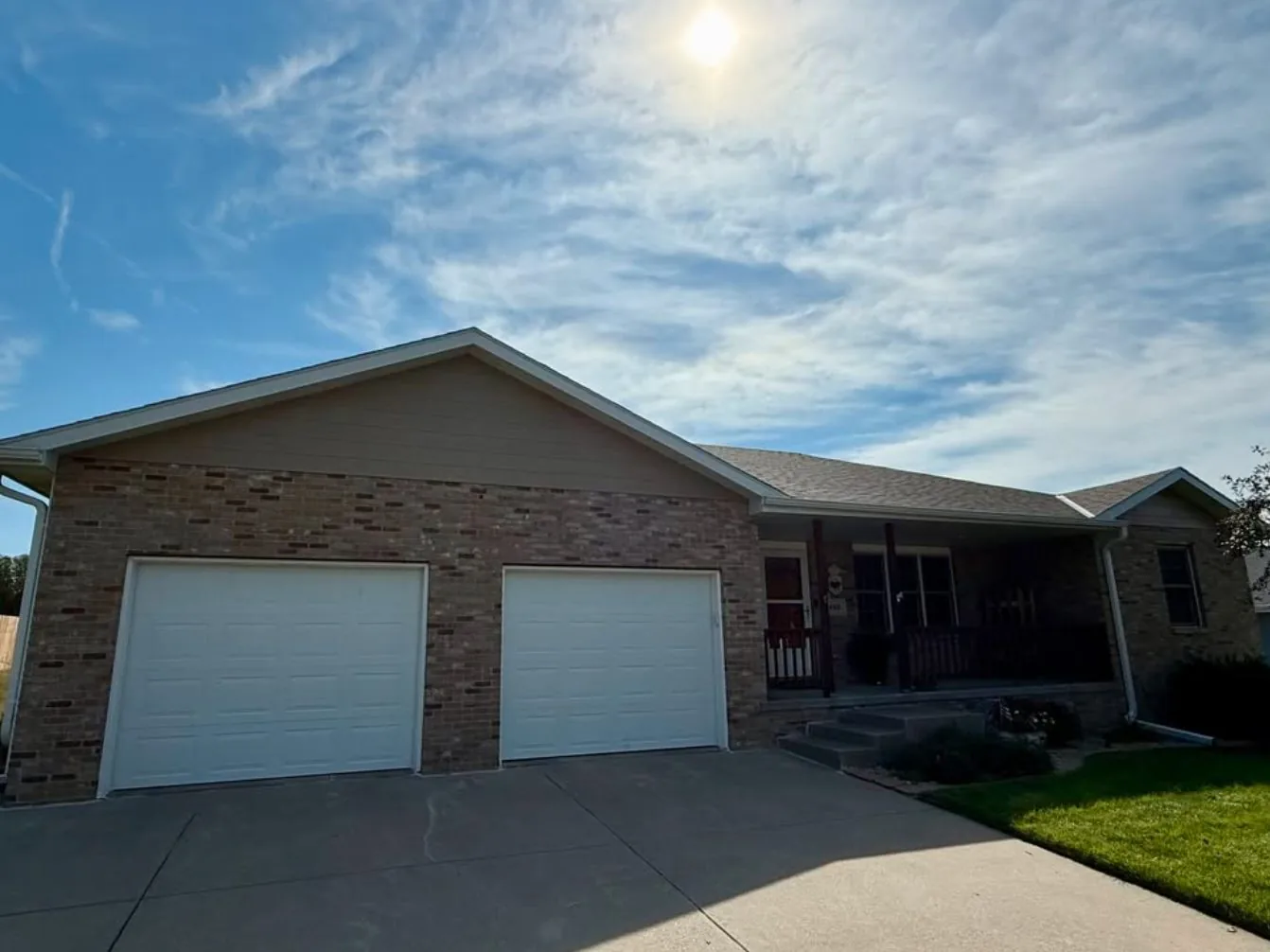
Choosing Roofing Materials for Nebraska Weather
Asphalt shingles are the most common choice on homes, and the decision usually comes down to standard architectural shingles or impact-resistant ones. A Class 4 impact rating means samples survived a 2-inch steel ball dropped from 20 feet in the UL 2218 test without cracking. These shingles cost more, and some insurers offer discounts for them, so ask your agent before you choose.
Architectural asphalt shingles
Thicker, layered shingles with a dimensional look. The standard choice for most replacements. Check the wind rating on the wrapper, since Nebraska straight-line winds can be strong.
Impact-resistant (Class 4) shingles
Built to resist cracking from hail. The rating comes from a lab test, so it is not a promise against every storm, but it is worth a look in hail country.
Underlayment and ice barrier
Synthetic underlayment over the deck, with self-adhering ice barrier at the eaves where ice dams form. In Lincoln, the ice barrier is required.
Ventilation
Intake at the soffits and exhaust near the ridge keep the attic cooler in summer and drier in winter. That helps shingles last and cuts down on ice dams.
What Affects the Cost of a New Roof
Roof cost depends on size, pitch, complexity, material and what is under the old shingles. A steep roof with many valleys, dormers and penetrations takes more labor than a simple low-pitch gable. Extra layers to tear off, rotted decking, new flashing and ventilation upgrades add cost, and impact-resistant shingles cost more than standard. We give a free, written bid so you can see what you are paying for.
- Roof size. Measured in squares, 100 square feet each.
- Pitch. Steep roofs need more safety gear and go slower.
- Complexity. Valleys, dormers, skylights and chimneys add cuts and flashing.
- Tear-off. More layers mean more labor and disposal.
- Decking. How much sheathing needs to be replaced once the old roof is off.
- Material. Standard architectural or impact-resistant shingles.
- Ventilation and edges. New vents, drip edge, and any gutter or fascia work.
- Timing. Demand spikes after big hailstorms, which can affect scheduling.
How to Choose Roofers in Lincoln, NE
Pick a roofer who is local, registered and insured, and who gives you a written bid. After big storms, out-of-town crews knock on doors around Lincoln. Some do fine work, but some are gone by the time a leak shows up. Ask where their office is, who will be on your roof, and how they handle surprises like rotted decking.
- Registered and insured? Nebraska requires contractors to register with the Department of Labor. Ask for proof of insurance. Elevated is licensed and insured.
- Written bid? It should list materials, tear-off, ice barrier, flashing, ventilation and how decking repairs are priced.
- Code? Ask how they meet Lincoln's ice barrier, drip edge and layer rules.
- Who is my contact? You should know who to call during the job.
- Local office? Ours is at 701 P Street, Suite 105, in Lincoln.
Be careful with anyone who pushes you to sign on the spot or wants a large payment before materials show up.
Roofing Across Southeast and Central Nebraska
From our Lincoln office we handle roofing in Lincoln, Seward, Waverly, Hickman, Milford, Crete, York, Aurora, Grand Island, Hastings, Kearney, Beatrice, Wahoo and Ashland. Call Brenton Roby at (402) 417-3937 for a free estimate. In Seward and Seward County, call Trey Barnes at (402) 641-7709. Office hours are Monday to Friday, 8:00 AM to 5:00 PM.
Town pages: roofing in Seward, roofing in York, roofing in Grand Island and roofing in Kearney.