Quick answer
Is synthetic stucco better than regular stucco?
Neither is better everywhere. Synthetic stucco, or EIFS, is lighter and adds insulation to the wall, but its thin finish dents and punctures more easily and it depends on careful sealing and drainage details. Traditional stucco is thick, hard and impact resistant, but it is heavy, cracks as it cures and settles, and adds little insulation.
What is the difference between traditional stucco and EIFS?
Traditional stucco is a cement based plaster, usually applied in three coats over metal lath to a total thickness close to an inch. EIFS, short for exterior insulation and finish system, is a foam insulation board covered with a thin reinforced base coat and a textured finish. When you compare synthetic stucco vs traditional stucco from the street, they look alike. Up close they behave very differently, and the repair method has to match the system on your wall.
| Traditional stucco | EIFS (synthetic stucco) | |
|---|---|---|
| What it is | Cement, sand and lime plaster over metal lath | Foam board, mesh reinforced base coat, acrylic finish |
| Thickness | About 7/8 inch in three coats | Thin coatings over the foam board |
| Weight | Heavy | Light |
| Insulation | Very little | Adds insulation to the wall |
| Impact | Hard and impact resistant | Thin finish can dent or puncture in hail |
| Water management | Relies on a weather barrier and drainage behind it | Relies on sealant joints, flashing and, in drainable systems, a drainage plane |
| Tap test | Solid and hard | Feels hollow or gives slightly when pressed |
What eaves work do you handle?
We repair and replace fascia, soffit and eave trim, add venting, and seal the joint where stucco or EIFS meets the roof edge, so the eaves shed water instead of soaking it up.
The eaves are the edge of the roof that overhangs the wall: the soffit underneath, the fascia board on the face, and the trim and venting around them. They take the weather first, so they are usually the first part of a house to rot, peel or pull loose.
- Fascia repair and replacement: rotted or split boards behind the gutters, replaced and primed or wrapped in aluminum.
- Soffit repair: sagging, stained or open soffit panels, vented or solid, in wood, aluminum, vinyl or fiber cement.
- Eave venting: adding or clearing intake vents so the attic breathes and ice dams are less likely.
- Animal and storm damage: patching openings from squirrels, birds, wind and hail, then matching the paint or finish.
- Stucco at the eave line: sealing the joint where stucco or EIFS meets the soffit so water cannot get behind the finish.
If the gutters are part of the problem, our gutters, soffit and fascia page covers that work in more detail.
How can you tell if stucco or EIFS is letting water in?
Look for stains running down from the corners of windows, cracks at window and door corners, failed or missing caulk at joints, soft or bulging spots, and finish that sounds hollow or pulls away. Inside, watch for peeling paint, damp drywall or musty smells on outside walls. Water behind stucco or EIFS can rot the framing for years before it shows on the surface, so these early signs matter.
Warning signs outside
- Dark streaks or stains below windows, light fixtures and roof lines
- Diagonal cracks from window and door corners
- Cracked, gapped or missing sealant around windows, doors and penetrations
- Soft spots, bulges or finish that pulls away from the wall
- White deposits (efflorescence) on traditional stucco
- Stucco or EIFS buried in soil or mulch at the bottom edge
Warning signs inside
- Peeling paint or stains on inside faces of exterior walls
- Swollen window trim or baseboards
- Musty odors in rooms with stucco walls
If you see several of these, a moisture inspection that checks the wall behind the finish is worth doing before any patching.
Stucco repair in Lincoln, NE: repair, recoat or replace?
Repair when damage is local, like a few cracks, a hail hole or a damaged corner, and the wall behind it is dry. Recoat when the surface is sound but faded, stained or covered in fine hairline cracks. Replace when water has rotted sheathing or framing, when large areas are delaminating, or when the original system has no way to drain water. The wall behind the finish decides which one you need.
| Condition | Repair | Recoat | Replace |
|---|---|---|---|
| Isolated cracks or hail holes, dry wall | Yes | Optional, to blend color | No |
| Many fine hairline cracks, sound wall | Seal larger cracks | Yes, often with an elastic coating | No |
| Faded or patchy color | No | Yes | No |
| Failed sealant at windows | Replace sealant | After sealing | Only if water damage is found |
| Wet or rotted sheathing behind the finish | Not on its own | No | Yes, in the damaged area |
| Large delaminating areas | No | No | Yes |
Why do stucco and EIFS crack in Nebraska?
Nebraska weather is hard on stucco in Lincoln, NE and across the state. Water gets into small cracks, freezes, expands and widens them, and that cycle repeats many times every winter. Houses settle and framing shrinks, which shows up as cracks at window corners. Hail punches holes in the thin finish of EIFS. Sealant joints dry out in the summer sun. And missing details, like kickout flashing where a roof meets a stucco wall, send roof water straight into the wall.
- Freeze and thaw: small cracks grow every winter if water can get in.
- Movement: settling, framing shrinkage and missing control joints crack traditional stucco.
- Hail: EIFS finish dents and punctures, and traditional stucco can chip.
- Sealant age: caulk at windows and joints breaks down and needs replacing over time.
- Flashing: missing kickout flashing, window head flashing or drip edges let water behind the finish.
- Ground contact: stucco or foam buried in soil wicks moisture and invites insects.
How does stucco and EIFS repair work?
A lasting repair starts by finding where the water or damage came from, not just covering the crack. Damaged material is cut out back to sound edges, wet sheathing is replaced, and the weather barrier and flashing are restored. Then the system is rebuilt layer by layer to match the original, and the finish is textured and colored to blend in. For EIFS repair that means new foam, mesh, base coat and finish.
- Inspect: identify stucco or EIFS, map cracks and stains, and check for moisture behind the finish.
- Fix the cause: flashing, sealant, grading, or gutters and downspouts that dump water on the wall.
- Cut out damage: remove failed material back to solid edges.
- Repair the wall: replace wet or rotted sheathing and restore the weather barrier.
- Rebuild the layers: lath and cement coats for stucco, or foam board, mesh and base coat for EIFS.
- Finish: match texture, then blend color, sometimes by recoating a full wall to corners.
- Seal: new sealant at windows, doors and penetrations.
Can you put new stucco over old stucco?
Often yes, if the old stucco is solid, clean and well bonded to the wall. The surface is cleaned, loose areas are removed, and a bonding agent or new lath is used so the new coat grips. It is the wrong move if the old stucco is cracked from water damage, pulling away, or hiding rot, because new stucco would only cover the problem. Patch products work for small spots, while larger areas need a proper base and finish coat.
Stucco patch vs stucco mix
Premixed stucco patch is meant for small holes and cracks. It is easy to use but is not built to cover large areas. A full stucco mix, applied as base and finish coats, is what larger repairs and resurfacing need. Using patch on a big area usually shows up as a different texture and color within a season or two.
Do you handle commercial EIFS and stucco?
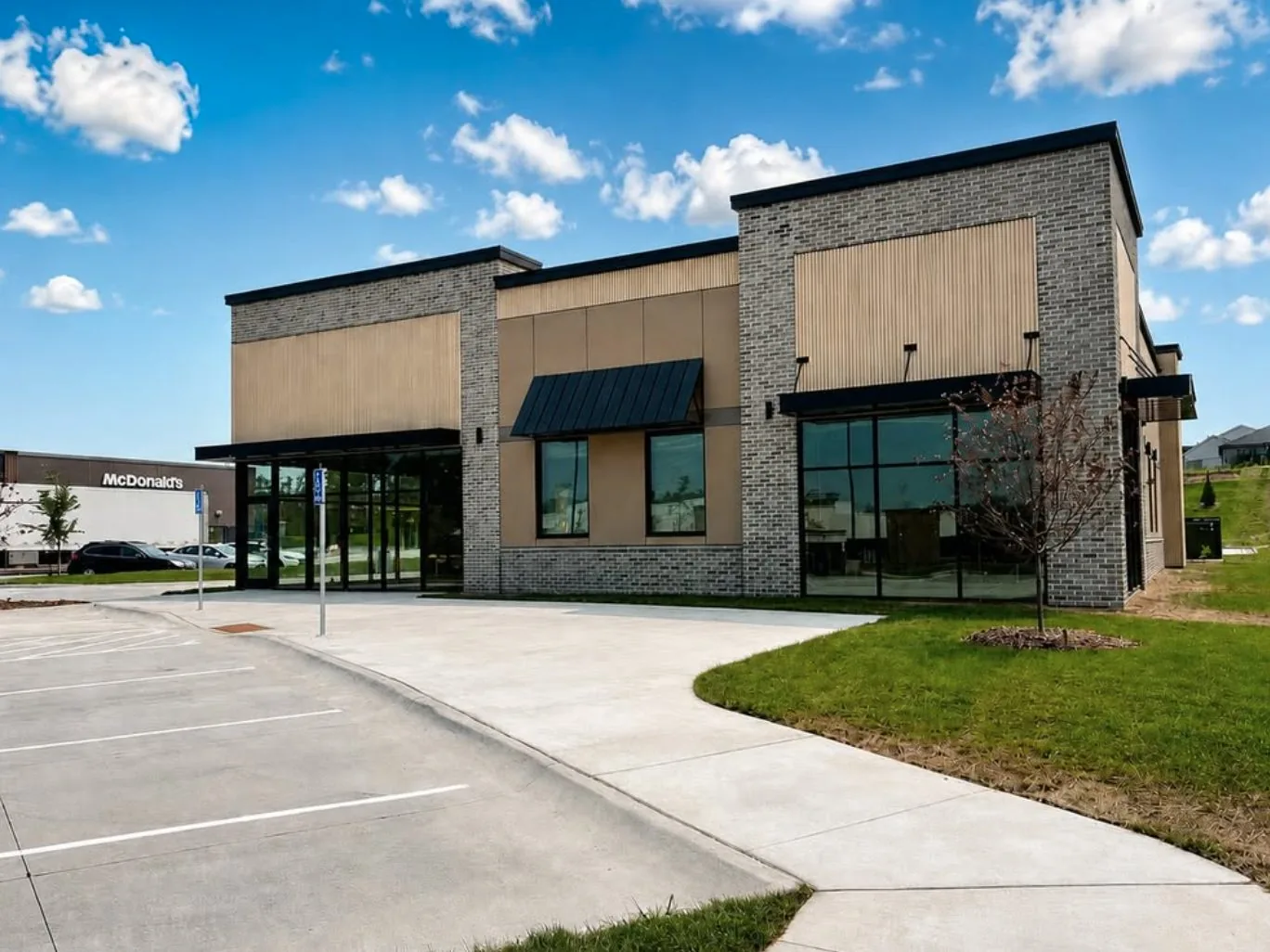
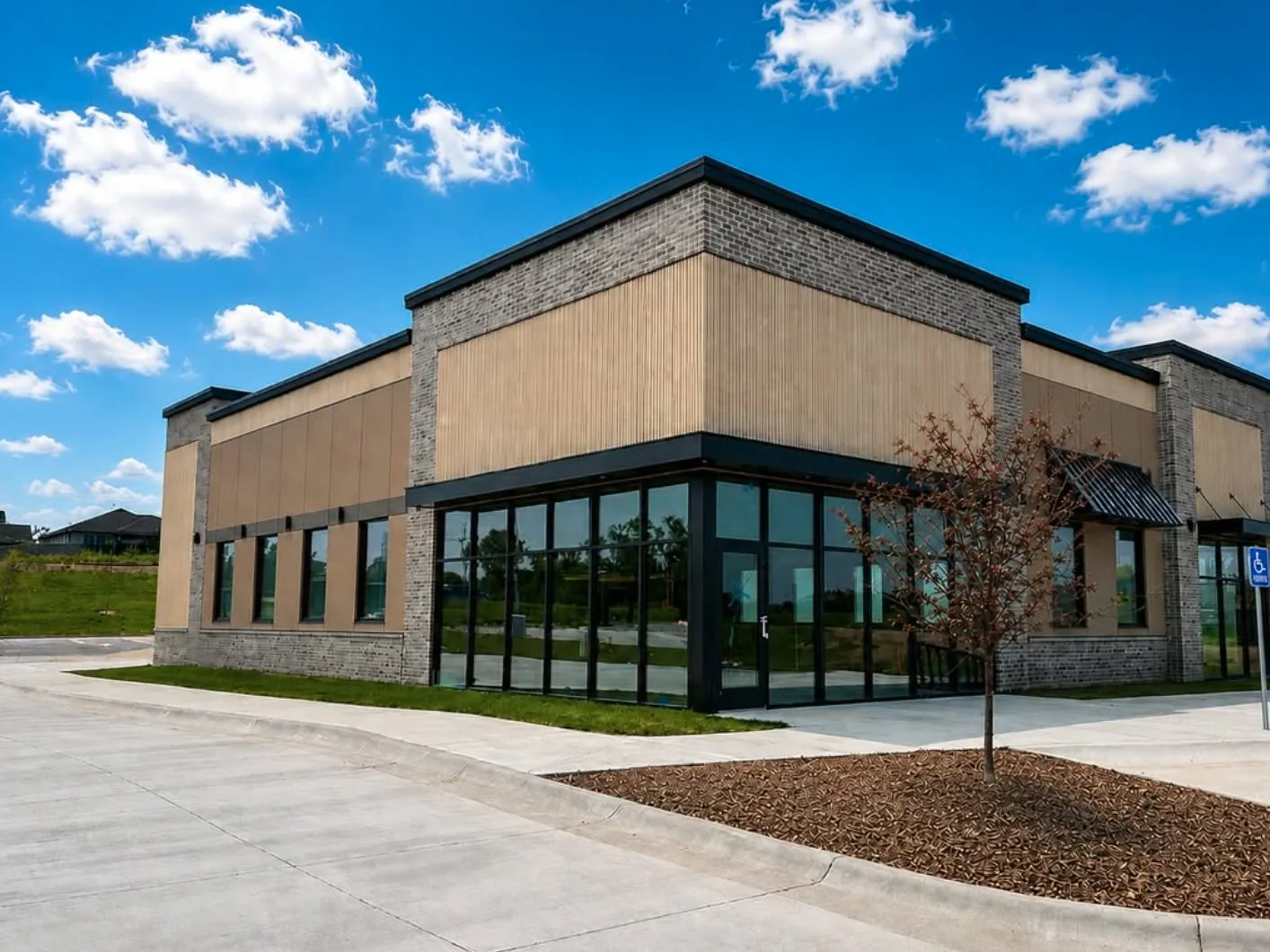
Yes. We work on residential and commercial EIFS and stucco, for building owners, property managers and general contractors. On a commercial facade, EIFS often sits next to brick, storefront glass and metal trim, so the joints between those materials are where problems start. We repair damaged areas, replace failed sealant and install new EIFS or stucco where the plans call for it. Our commercial exterior contractor page covers how we work with builders.
- Retail and office facades with brick and EIFS or stucco panels
- Hail and impact repairs at ground level and entries
- Sealant replacement at storefronts, windows and control joints
- New EIFS or stucco on additions and new buildings
What affects the cost of stucco and EIFS repair?
The biggest factor is what is behind the finish. A dry wall with surface cracks costs far less to fix than one with rotted sheathing. After that, cost depends on the size of the area, whether it is stucco or EIFS, how hard the texture and color are to match, how high the work is, and whether a full wall needs a recoat so the repair does not stand out.
- Moisture damage found behind the finish
- Square footage and number of separate repair areas
- Traditional stucco or EIFS, and drainable or barrier EIFS
- Texture and color matching, including recoating to the nearest corner
- Height, scaffolding and access
- Flashing and sealant work around windows and doors
What should you ask an EIFS contractor in Nebraska?
Ask how they will confirm whether your wall is stucco or EIFS, how they check for moisture behind the finish, and how they will match texture and color. Ask whether they will fix flashing and sealant, not just the crack. We serve homeowners and businesses across Lincoln and out to Hastings and Kearney. Call Brenton at (402) 417-3937 for a free estimate and written bid.
- Is the system drainable or barrier EIFS, and does that change the repair?
- How will you handle wet sheathing if you find it?
- Will the repair blend, or does a full wall need recoating?
- Are you licensed and insured?
Elevated is licensed and insured, and there is no pressure to sign. Office hours are Monday to Friday, 8:00 AM to 5:00 PM.