Quick answer
How do you know if siding needs repair or replacement?
Repair makes sense when damage is limited to a few boards or one wall and the rest of the siding is still sound. Replacement is usually the better call when cracks, warping or loose panels show up on several walls, when the sheathing underneath feels soft, or when you cannot find a match for the damaged pieces.
What do siding contractors in Lincoln, NE actually do?
A siding contractor removes worn or damaged siding, checks the sheathing and weather barrier underneath, and installs new siding with the trim, flashing and sealant that keep water out of your walls. At Elevated we handle residential siding installation, full siding replacement and siding repair in Lincoln, NE, including hail and wind damage. Because we also do masonry, siding that meets brick or stone veneer accents can be handled by one company.
- Full siding replacement: tear off, inspect the wall, new weather barrier and new siding.
- Siding repair: replacing cracked, holed or loose boards and panels on one wall or a few spots.
- Storm damage: hail and wind repairs, often alongside roof and gutter work.
- Trim and transitions: corners, window and door trim, and the joints where siding meets brick, stone or a roof line.
Should you repair or replace your siding?
Repair when the damage is small, the material is still flexible and in good shape, and you can get matching pieces. Replace when problems are spread across the house, the siding is brittle or faded past matching, or there are signs of water behind the wall. A simple rule: if more than one full wall needs work, price out both options before you decide, because the gap is often smaller than people expect.
| What you see | Usually repair | Usually replace |
|---|---|---|
| A few cracked or holed boards | Yes, if a match is available | If the same damage is on most walls |
| Loose or blown off panels | Yes, after checking the nailing | If panels keep coming loose on several walls |
| Warping or buckling | If caused by one heat source, like a grill | If it shows up across the house |
| Soft spots, stains inside, peeling interior paint on outside walls | Rarely, the wall needs to be opened | Often, once rotted sheathing is found |
| Heavy fading or chalking | Paint may work on some materials | When the color can no longer be matched |
Which siding material works best on a Nebraska home?
Most homes around Lincoln use vinyl, fiber cement, engineered wood or metal siding. Vinyl is the most common and needs little upkeep, but it gets more brittle in cold weather and can crack in hail. Fiber cement and engineered wood are heavier and generally handle impacts better, but they need paint over time. Metal resists cracking but can dent. The right choice depends on your budget, how exposed the house is, and how it looks next to your brick or stone.
| Material | Hail and cold | Upkeep | Good to know |
|---|---|---|---|
| Vinyl siding | Becomes brittle in cold weather and can crack or puncture in hail | Low, wash it now and then | Needs room to expand and contract, so nailing matters |
| Fiber cement | Generally handles impact better than vinyl, edges can chip | Repaint every several years | Heavy, needs sealed cut ends and proper clearances |
| Engineered wood | Generally good impact resistance | Repaint and keep edges sealed | Must be kept off the ground and away from standing water |
| Metal (steel or aluminum) | Will not crack, can dent in larger hail | Low | Dents are hard to repair without replacing panels |
Ask about thickness and profile too. Thicker vinyl panels and well supported profiles tend to stay flatter on the wall and resist wind better than thin builder grade panels.
How does hail damage siding?
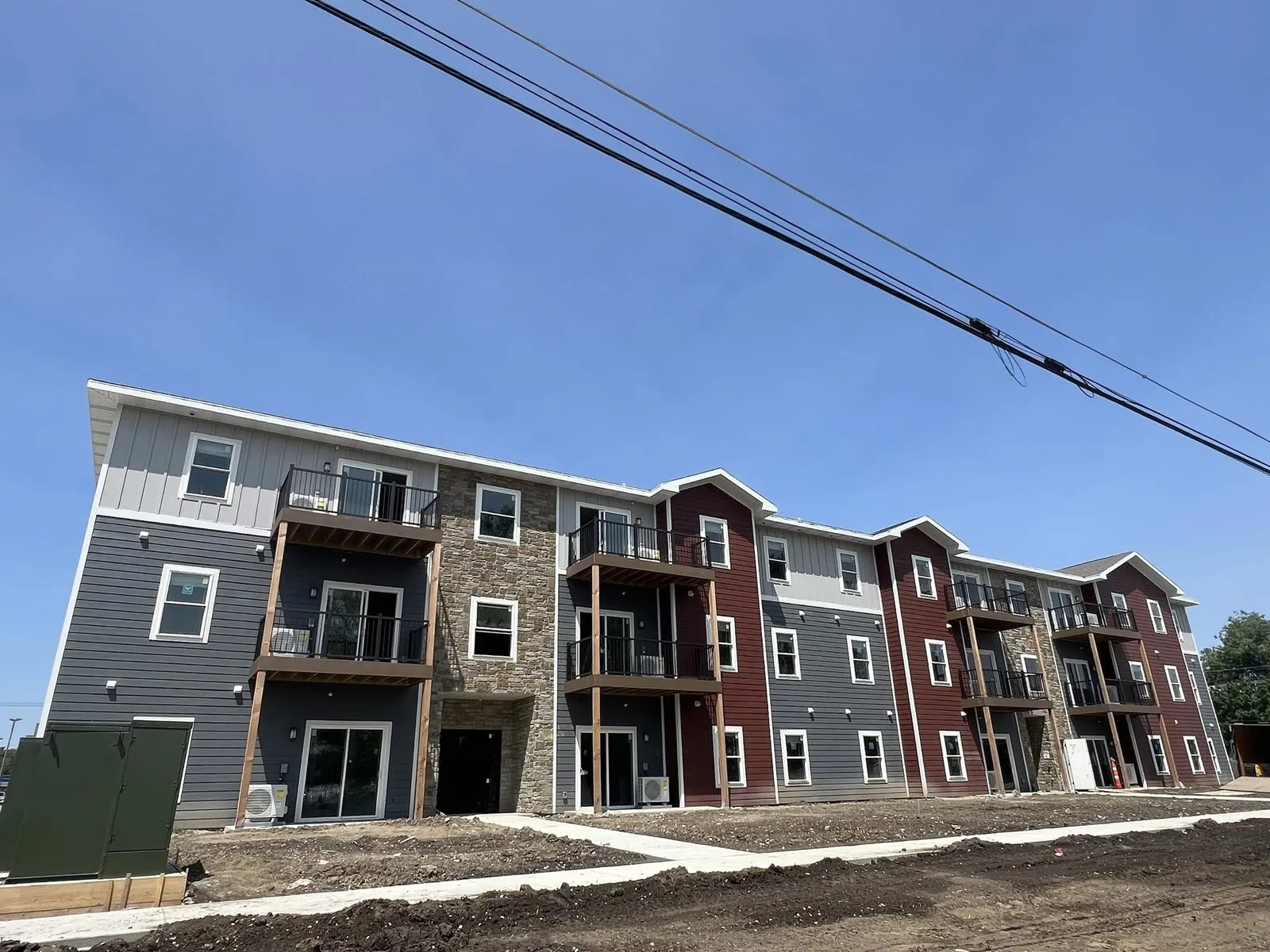
Hail cracks and punches holes in vinyl siding, chips the edges and paint of fiber cement and engineered wood, and dents metal siding. Damage is usually worst on the walls that faced the storm. Cold vinyl breaks more easily, so a spring storm can do more harm than the same hail in summer. Look closely at the side of the house the wind came from, and photograph anything you find before it gets repaired. Our hail damage repair page covers the full process.
Siding hail damage checklist
- Cracks or round holes in vinyl panels, often at the bottom edge of each course
- Chipped paint or bruised spots on fiber cement or wood trim
- Dents in metal siding, window wraps and corner posts
- Torn or holed window screens on the same wall, a good sign of large hail
- Spatter marks, clean spots on dirty siding where hailstones hit
Take wide photos of each wall and close photos of each damaged spot, and write down the storm date. That record helps whether you file an insurance claim or pay for the repair yourself.
Can new siding match your old siding?
Sometimes, but not always. Siding profiles get discontinued and colors fade in the sun, so a new panel can look different even when it is the same product. A good contractor will try to identify the profile and color first. If no match exists, common fixes are moving original pieces from a less visible wall to the damaged one, redoing one full wall so the break falls at a corner, or replacing the siding on the whole house.
- Find the product: check the back of a loose piece or leftover boxes in the garage for a brand, profile and color name.
- Compare in daylight: hold a sample against a wall that gets sun and one that does not.
- Borrow from the back: original pieces from a hidden wall can patch the front, with new siding going on the back.
- Break at corners: if one wall must be new, ending the change at an outside corner makes a slight color difference much harder to see.
If the damage came from a storm, how your insurance handles matching depends on your policy wording, so ask your agent before work starts.
What happens during a siding replacement?
A siding replacement starts with a free estimate and a written bid, then moves to tear off, a wall inspection, new weather barrier and flashing, and finally the new siding and trim. The part most homeowners never see is the most important: what is under the siding. Rotted sheathing, missing flashing over windows, or gaps around doors should be fixed before new siding covers them up again.
- Estimate and written bid: we measure, look at the existing siding and talk through material and color.
- Prep: protect plants, windows and the area around the house.
- Tear off: remove old siding down to the sheathing.
- Inspect the wall: look for soft or stained sheathing and replace damaged sections.
- Weather barrier and flashing: house wrap, window and door flashing, and kickout flashing where a roof meets a wall.
- Install: starter strip, corners, trim, then the siding itself, following the manufacturer's installation instructions.
- Clean up: magnet sweep for nails and haul away debris.
What affects the cost of siding replacement?
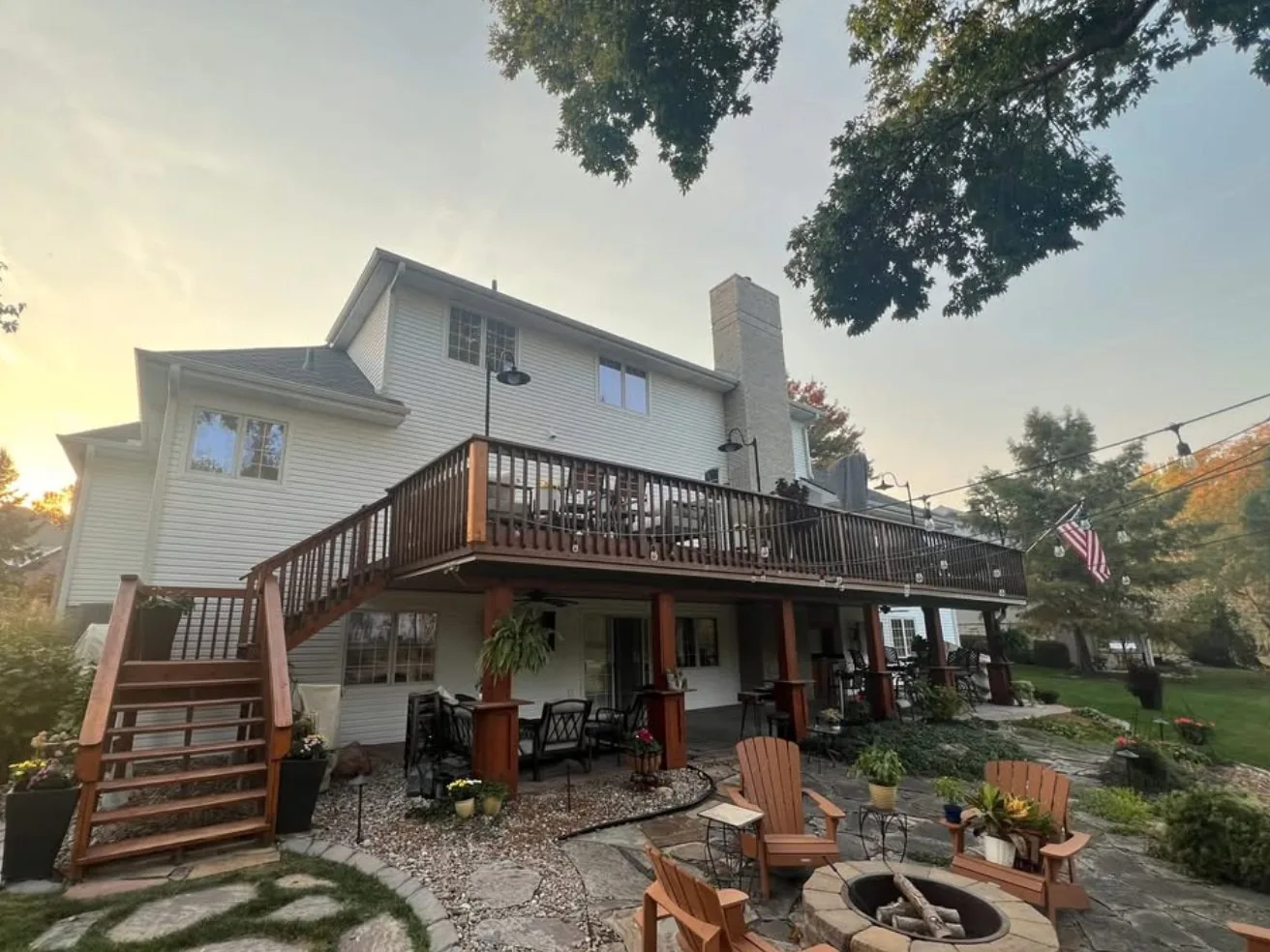
Siding replacement cost depends mostly on the size of your walls, the material you choose and how much repair is hiding under the old siding. Two story homes, steep gables and lots of windows add labor. Removing more than one old layer, replacing rotted sheathing or adding stone accents all change the price. A written bid should spell out each of these so you can compare contractors line by line.
- Wall area: measured in squares (100 square feet each), minus large openings.
- Material and thickness: vinyl, fiber cement, engineered wood or metal, and the grade within each.
- Height and access: two and three story walls need more setup time.
- Tear off: one layer or more, and disposal.
- Hidden repairs: sheathing, window flashing and rotted trim found after tear off.
- Details: number of windows, doors, corners and gables.
- Related work: many homeowners replace gutters, soffit and fascia at the same time, since they come off anyway.
What should you ask siding companies in Lincoln, NE?
Ask every siding company the same questions so you can compare bids fairly. Are they licensed and insured? Are they registered with the Nebraska Department of Labor contractor registration program? What exactly is included, and how are surprises like rotted sheathing handled? Who will be on site, and who do you call with questions? A clear written answer to each one tells you a lot about how the job will go.
- Is house wrap or another weather barrier included, and how are windows flashed?
- Will the old siding be removed, or installed over? Why?
- How will damaged sheathing be priced if you find it?
- Do you follow the siding manufacturer's installation instructions? Siding put up outside those instructions tends to buckle, rattle or leak.
- How long will the job take, and what happens if weather stops work?
- How do you protect landscaping and clean up nails?
We are licensed and insured, and every estimate is free with a written bid. Call Brenton at (402) 417-3937 to set one up.
Where do we install and repair siding?
We work out of our office at 701 P Street in Lincoln and serve homeowners across southeast and central Nebraska. That includes siding and roofing in Waverly, contractor work in Seward, and towns as far west as siding in Grand Island. For Seward and Seward County, call Trey at (402) 641-7709. Everywhere else, call Brenton at (402) 417-3937.
Our full list covers Lincoln, Seward, Waverly, Hickman, Milford, Crete, York, Aurora, Grand Island, Hastings, Kearney, Beatrice, Wahoo and Ashland, plus smaller Lancaster and Seward County towns. Office hours are Monday to Friday, 8:00 AM to 5:00 PM.